


Palm Springs, CA
Palm Springs sits in the middle of the desert. It gets only about five inches of rain each year. Summer temperatures can rise above 115 degrees. So how can a place this dry be filled with palm trees, green spaces, swimming pools, and neighborhoods?
The answer is simple but amazing. Palm Springs is built on top of a natural underground water supply called an aquifer.
What Is an Aquifer?
An aquifer is a layer of sand, gravel, or rock underground that stores water.
Think of it like a giant sponge under the ground. When it rains or when snow melts in the nearby mountains, water soaks into the earth. That water moves down and fills the tiny spaces between sand and rocks. Over time, it collects and forms a huge underground water storage area.
Wells are drilled into this underground “sponge” so the water can be pumped up and used for homes, businesses, and parks.
Where Does Palm Springs’ Water Come From?
Palm Springs sits over the Coachella Valley groundwater basin. This basin is the main aquifer that supplies water to the area.
According to the Desert Water Agency, groundwater from this aquifer provides most of Palm Springs’ drinking water. The water is stored naturally underground and is replenished by rainfall and snowmelt from the nearby San Jacinto Mountains and other mountain ranges.
The Coachella Valley Water District also explains that the groundwater basin acts like a tilted bathtub filled with sand and gravel. Water collects in this underground space and can be safely pumped out through deep wells.
Scientists at the United States Geological Survey have studied this basin and confirm that the valley’s aquifers are made up of layers of sand, gravel, silt, and clay that hold and move water underground.
Why That Makes Palm Springs an Oasis
An oasis is a place in the desert where water allows plants and people to live.
Long before hotels and neighborhoods were built, the Agua Caliente Band of Cahuilla Indians settled here because of natural springs fed by this same underground water system. You can still see palm-filled desert oases today at places like Indian Canyons.
Without the underground aquifer, Palm Springs would look very different. There would be far fewer trees, fewer homes, and far less life.
A Hidden Treasure Beneath Our Feet
Palm Springs is not just an every day desert city with palm trees. It is an actual oasis because of the natural aquifer beneath it.
Water stored underground, collected from rain and mountain snow, has made a thriving life possible here for thousands of years. Today, local water agencies carefully manage this resource to make sure it lasts for future generations.

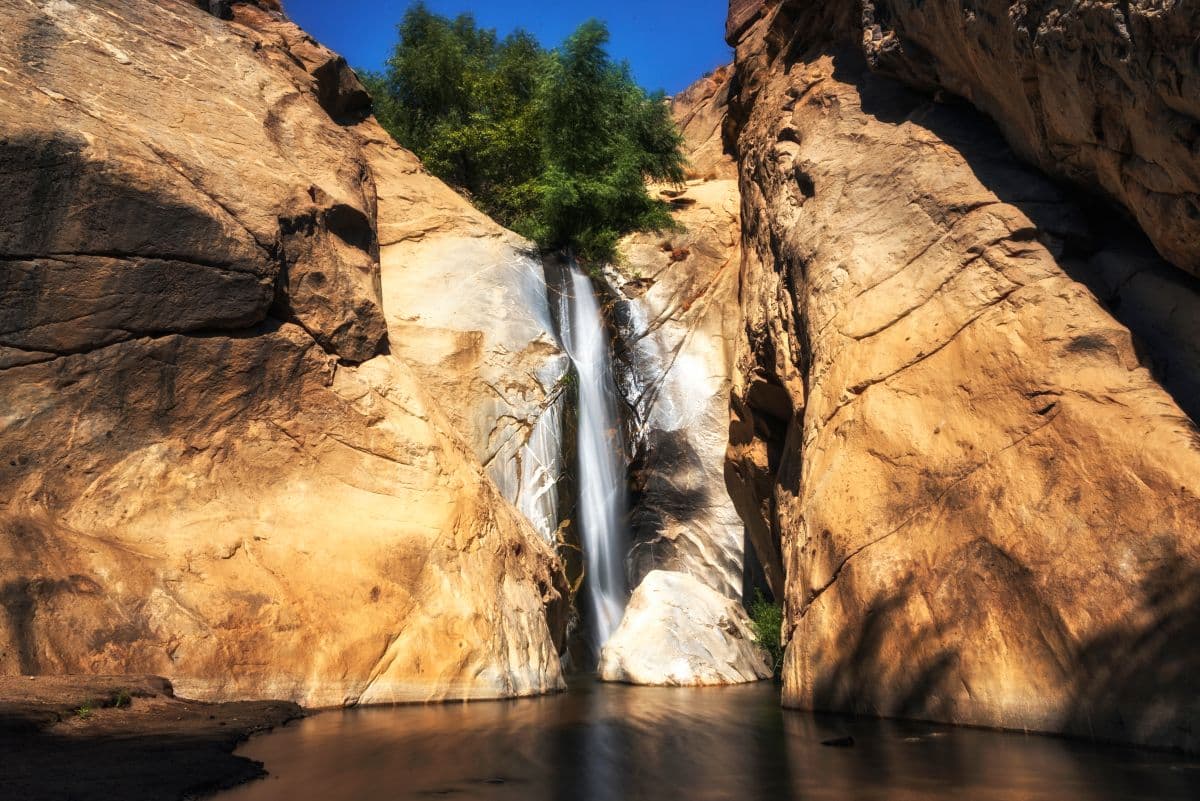
Tahquitz Waterfall, Palm Springs, CA
You must be logged in to post a comment.