


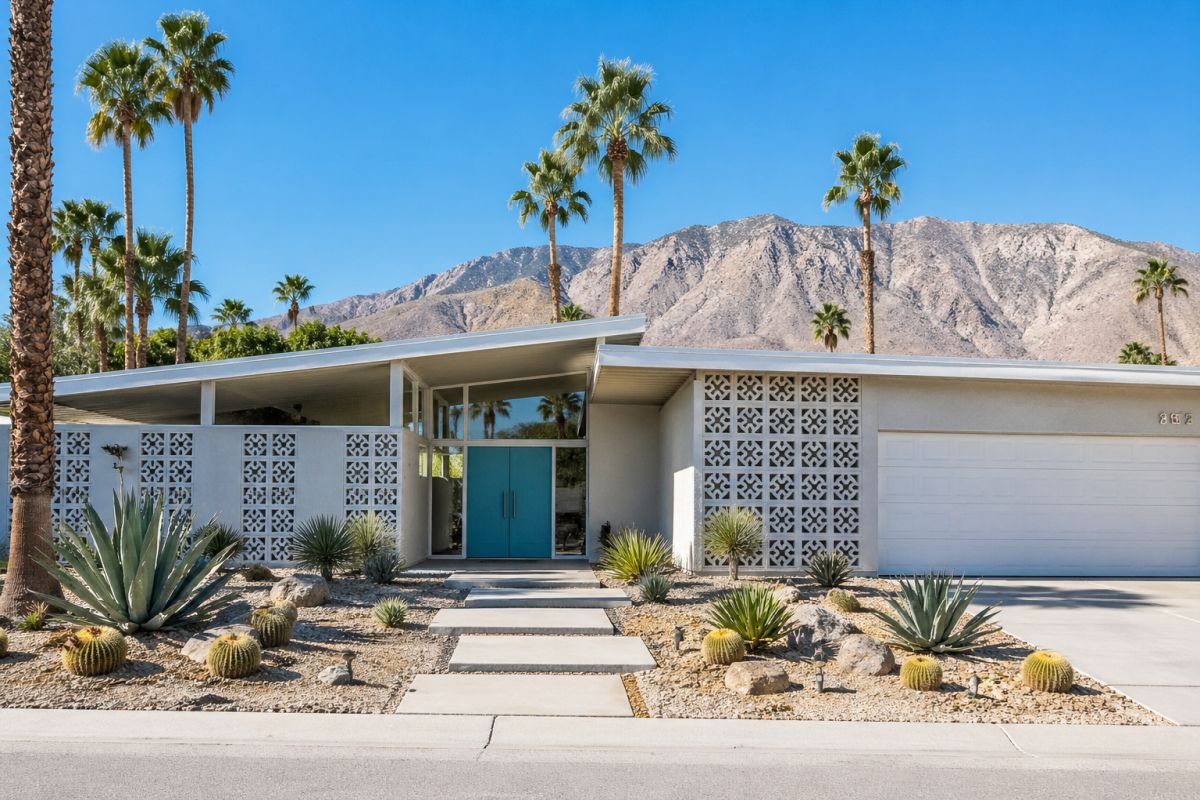
New real estate figures show Palm Springs home values remain well below their 2022 peak, while slower sales and changing inventory levels create opportunities for buyers as the desert’s peak season approaches.
PALM SPRINGS, Calif.
The Palm Springs housing market is entering its fall season with home prices below their pandemic-era highs, slower sales activity and buyers enjoying greater negotiating opportunities than they did just a few years ago.
According to the latest September 2026 Desert Housing Report released by Greater Palm Springs REALTORS® (GPSR), the estimated price of an average-sized single-family home in Palm Springs was $1,102,246, a decline of 1.4% compared with a year earlier.
More significantly, the figure is now 22.3% below the city’s 2022 peak of approximately $1.42 million, illustrating how much the market has adjusted since the housing boom.
The report also found that attached homes, including condominiums and townhomes, experienced a smaller annual decline of 0.7%, with the estimated price of an average-sized property at $425,614.
The figures come as Palm Springs prepares for its traditionally busy winter real estate season, when seasonal residents, second-home buyers and visitors return to the Coachella Valley.
Palm Springs Home Prices Remain Below Their Peak
GPSR’s September report shows that Palm Springs continues to experience a price adjustment, although the pace of annual declines has moderated.
For a typical 2,175-square-foot detached home, the estimated value was $1,102,246, compared with $1,118,046 a year earlier.
The estimated value of a typical 1,250-square-foot attached home was $425,614, compared with $428,463 in September 2025.
PALM SPRINGS HOME PRICE COMPARISON — SEPTEMBER 2026
| Property type | Estimated price | Change from 2022 peak |
| Single-family | $1,102,246 | −22.3% |
| Condo / Townhome | $425,614 | −11.3% |
Source: GPSR September 2026 Desert Housing Report. Prices are standardized estimates based on average city property sizes and recent median price per square foot, not actual median transaction prices.
Unlike traditional median sale prices, which can fluctuate depending on the size and type of homes sold during a particular month, GPSR uses price-per-square-foot calculations applied to a representative property size.
This methodology helps provide a more consistent comparison of property values over time.
The figures cover Palm Springs citywide, including both the 92262 and 92264 ZIP codes. Conditions can differ considerably between individual neighborhoods and property types.
Inventory Remains Substantial, but Has Not Surged
Palm Springs had 599 homes listed for sale as of October 1, 2026, compared with 615 at the same time last year.
That represents a modest 2.6% decline in inventory, suggesting that the market’s current challenges are being driven more by slower buyer demand than by an overwhelming increase in available homes.
Across the Coachella Valley, total inventory stood at 2,765 properties, down 1.2% from a year earlier.
GPSR reported that the region had 4.5 months of housing supply, compared with 4.6 months a year earlier.
A supply level of approximately four to six months is generally associated with a relatively balanced market. However, the balance can shift considerably depending on location, property type and asking price.
For buyers, the current inventory provides choices without the intense competition that characterized much of the pandemic-era market. For sellers, it means homes must compete on price, condition and presentation.
Palm Springs Continues to Lead the Valley in Home Sales
Despite softer prices, Palm Springs remains one of the Coachella Valley’s most active residential real estate markets.
According to GPSR, Palm Springs recorded an average of 97 home sales per month during the three-month period ending in September, the highest among the valley’s major cities.
Palm Desert followed with 93 sales per month, while Indio recorded 71.
However, Palm Springs’ sales activity was below the 117 monthly sales recorded during the same period last year, representing a decline of approximately 17%.
Across the Coachella Valley, the three-month average was 483 sales per month, down 11% from 543 a year earlier.
The region’s seasonally adjusted sales activity was also 33.7% below historical norms established before the pandemic, according to GPSR.
gpsr.net
Homes Are Selling Faster Than Last Year, but Buyers Still Have Leverage
One encouraging sign for sellers is that Palm Springs properties are not necessarily taking longer to sell.
The median number of days on the market in Palm Springs was 55 days in September, compared with 61 days a year earlier.
Across the Coachella Valley, the median was 57 days, down from approximately 60 days last year.
That suggests appropriately priced homes are continuing to attract buyers, even as overall transaction volume remains below historical averages.
At the same time, buyers are still negotiating discounts.
Across the valley, detached homes sold for an average of 2.8% below their final listing prices, while attached homes sold for an average of 3.8% below asking prices.
Only 11% of homes sold above their listing prices, compared with 11.4% a year earlier.
In Palm Springs, the average discount was approximately 4.3% from the final listing price, according to GPSR’s city-level figures.
What Sellers Should Expect This Fall
For homeowners preparing to sell, the September numbers point to a market where realistic pricing is increasingly important.
Although Palm Springs inventory has declined slightly compared with last year, buyers remain selective.
Properties that are updated, well-maintained and priced in line with recent comparable sales may continue to attract interest. Homes requiring substantial renovations or priced according to the market’s 2022 peak may face greater challenges.
The return of seasonal residents and visitors during the fall and winter could help support activity, but the latest numbers suggest sellers should not assume the arrival of peak season will automatically translate into higher prices.
A Market in Transition, Not a Collapse
Despite the declines from pandemic-era highs, the Coachella Valley’s broader housing market has demonstrated relative price stability.
The regional median price for detached homes was $624,000 in September, down just 0.3% from a year earlier.
Attached homes recorded a median price of $425,000, up 1.2% year over year.
Those figures suggest that the market is experiencing an uneven adjustment rather than a widespread collapse in property values.
For Palm Springs, the coming months will be particularly important.
The city’s housing market depends partly on seasonal demand, second-home purchases and buyers relocating from other parts of California and beyond.
Whether that demand strengthens enough to absorb available inventory will help determine the direction of prices heading into 2027.
For now, Palm Springs remains an active real estate market, but one where buyers have more negotiating power and sellers face greater pressure to price competitively.