


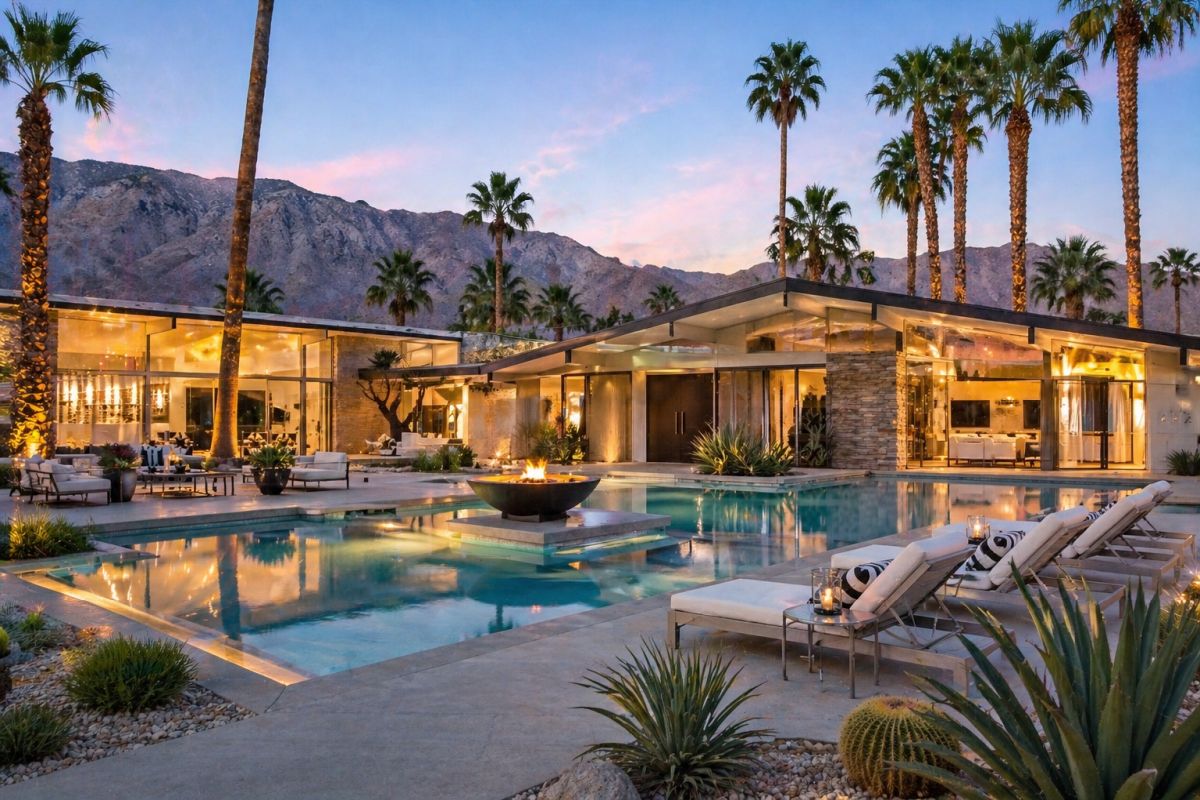
Palm Springs, CA
Palm Springs is known for its mid-century homes, mountain views, and resort lifestyle. But beneath many of those homes sits a unique piece of history that shapes the local real estate market to this day: lease land.
The Land Came First
Long before Palm Springs became a destination, the land belonged to the Agua Caliente Band of Cahuilla Indians. The tribe has lived in the Coachella Valley for centuries, long before California became part of the United States.
In the late 1800s, the federal government divided tribal land into a checkerboard pattern of alternating sections. Some parcels remained under tribal ownership, while others were transferred to non-Native settlers and later private owners. This layout still defines much of Palm Springs today.
Why Lease Land Exists
As Palm Springs grew in the early to mid-20th century, especially during the Hollywood era, demand for housing increased quickly. Developers wanted to build on tribal land, but the tribe chose to retain ownership rather than sell it outright.
Instead, they created long-term land leases. Buyers could purchase the home or building, but not the land underneath it. That land would be leased from the tribe, typically for terms ranging from 25 to 99 years.
This system allowed the Agua Caliente Band of Cahuilla Indians to maintain control of their land while still benefiting economically from Palm Springs’ rapid growth.
During the 1950s and 1960s, Palm Springs became a playground for Hollywood stars like Frank Sinatra and Bob Hope. Many of the homes, golf courses, and country clubs built during this era were constructed on lease land.
This helped fuel rapid development without requiring the tribe to give up ownership of valuable property. Entire neighborhoods, including some of the most desirable areas in Palm Springs, sit on leased land.

How Lease Land Works Today
Today, lease land remains a major part of the Palm Springs real estate market. Buyers who purchase a home on leased land pay a monthly or annual lease fee to the landowner, often the Agua Caliente Band of Cahuilla Indians or a private lease.
Lease terms vary widely. Some leases have decades remaining, while others are closer to expiration. Over the years, many leases have been extended, giving homeowners more long-term stability.
For buyers, lease land often means lower purchase prices compared to fee-simple properties (where you own both the home and the land). But it also requires careful review of lease terms, costs, and expiration dates.
A Defining Feature of Palm Springs
Lease land is not just a technical detail. It is a defining feature of Palm Springs and a direct link to the region’s history.
What started as a way for the Agua Caliente Band of Cahuilla Indians to protect and benefit from their land has shaped decades of growth, architecture, and community development.
Today, whether someone is buying a mid-century home, a condo near downtown, or a golf course property, there is a good chance they are stepping into a system rooted in both Native American history and the evolution of Palm Springs itself.

The Author, Eric Gray, is a REALTOR®️ with Desert Lifestyle Properties, CA DRE 02225444
You must be logged in to post a comment.