


PALM SPRINGS, CA
Palm Springs officials face a decision about the future of the city’s police surveillance network as a $4.5 million state grant approaches its final year, raising questions about long-term costs, public safety and residents’ privacy.
The debate intensified during an October 14 City Council meeting, when the Palm Springs Police Department presented results from its Flock Safety camera program and residents raised concerns about how information collected by the system is used, stored and shared.
Police officials defended the technology as a crime-fighting resource, while critics argued that its effectiveness does not eliminate the need for stronger safeguards and public oversight. The council did not vote to discontinue or expand the program. Instead, councilmembers requested financial information, policy revisions and further examination of how the system operates.
A growing surveillance network
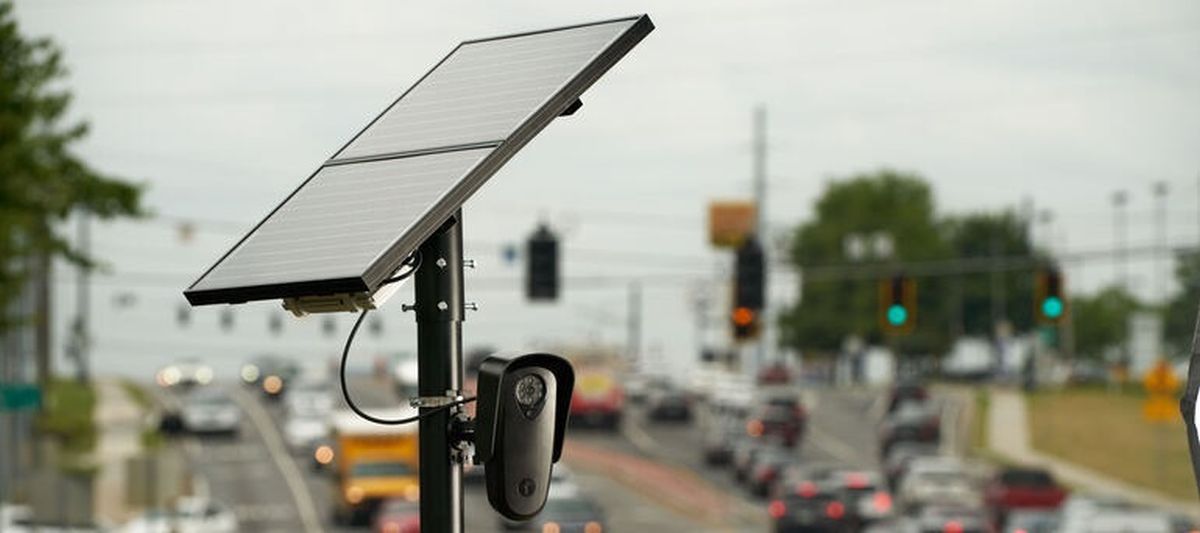
The department’s public safety camera system includes 55 automated license plate readers and 169 fixed closed-circuit television cameras, according to the October 14 presentation. The network also incorporates a real-time intelligence center and four drone docks.
License plate readers record information about passing vehicles, allowing police to search for vehicles connected to reported crimes, missing persons or other authorized investigations. The department says the cameras do not use facial recognition and that plate data is automatically deleted after 30 days unless retained for a specific investigation.
Police say access is restricted and audited, and the license plate information is shared with 26 other California law enforcement agencies under agreements with Palm Springs.
Police point to arrests and recovered vehicles
During the presentation, police reported that the camera network supported 138 arrests between March 10 and September 30, 2026. In a separate period from July 2025 through June 2026, the department said camera-assisted investigations helped recover 36 stolen vehicles and more than $365,000 in stolen property.
The department also cited a drop in vehicle thefts from 132 during April through June 2024 to 39 in the corresponding period in 2026, a reduction of approximately 70%. Police acknowledged that surveillance cameras cannot be credited as the sole cause of the decline; other enforcement and prevention strategies were also in use.
Camera-assisted arrests and recoveries show how the technology was used, but do not establish how much crime would have occurred without it.
Privacy concerns remain unresolved
Residents at the meeting questioned whether the city’s oversight procedures sufficiently protect against inappropriate surveillance. Joshua Hendrick, who tracks surveillance technology in the Coachella Valley, said he had sought compliance audits through a public records request without obtaining the requested records.
Police Chief Kyle Stjerne said the audits contain confidential information and that the department is working with the city attorney to determine what can be released. Other speakers warned that repeated vehicle-location records can reveal sensitive patterns of movement even without facial recognition.
The department says its policies restrict using the system for immigration enforcement and other prohibited purposes, subject to limited legal exceptions. Councilmembers asked officials to make sure those protections are reflected in the city’s contracts and policies and sought clarification about Flock Safety’s access to city data and video.
The financial question
The $4.5 million state grant that has helped support the program expires in December 2027. Palm Springs leases its 224 fixed cameras from Flock rather than owning them, so changing vendors could require replacing the equipment.
Councilmembers requested updated operating-cost estimates and an assessment of which parts of the system are essential. The city has not adopted a final funding plan for the period after the grant expires.
Stronger oversight under consideration
City officials are considering an ordinance that would create local penalties for intentional misuse of automated license plate reader technology, including improper searches for personal purposes. The proposal has not been adopted.
Palm Springs has also established a Technology and Surveillance Community Advisory Board to provide another avenue for reviewing police technology.
The larger question for the council is whether the program’s public safety benefits justify continuing it at its current scale once state funding ends, and what enforceable privacy protections should accompany that decision.