

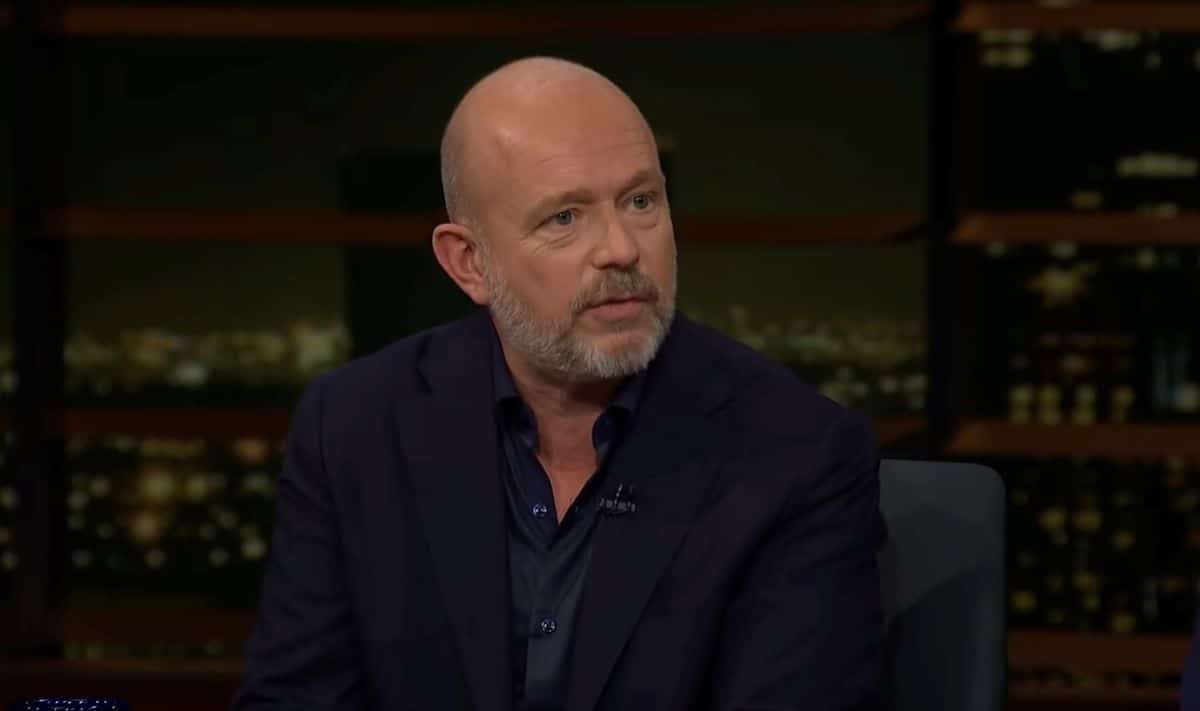
Appearing alongside Kentucky’s Democratic governor, Hilton argued that California voters are frustrated with rising costs, government bureaucracy and Democratic control, while facing questions about his ties to President Trump.
PALM SPRINGS, CA — With California’s gubernatorial election approaching, Republican candidate Steve Hilton appeared on HBO’s Real Time with Bill Maher on Friday, October 23, defending his campaign, criticizing Democratic leadership in Sacramento and insisting he can persuade voters in a state where Republicans have struggled to win statewide elections.
Hilton, a former Fox News host, joined Kentucky Democratic Gov. Andy Beshear for a panel discussion that turned to the challenges of winning elections across party lines, California’s affordability crisis and President Donald Trump’s political influence.
Maher questioned why Beshear had managed to win elections in heavily Republican Kentucky while Hilton faced an uphill challenge in traditionally Democratic California.
Hilton rejected the suggestion that polling numbers had already determined the outcome. “You’re talking about polls, not votes,” Hilton responded, arguing that Democratic and independent voters were increasingly willing to consider a Republican candidate because of dissatisfaction with California’s direction.
He said voters frequently approached him at campaign events to express frustration with the state’s political leadership and its high cost of living.
Hilton argued that California needs greater political competition after years of Democratic control, maintaining that a change in leadership could help address housing costs, homelessness and government performance.
Maher Questions Hilton’s Relationship With Trump
One of the evening’s most pointed exchanges came when Maher suggested that Hilton’s association with President Trump was hurting his chances in California.
Maher argued that Hilton had not sufficiently distanced himself from Trump, whose political standing in California presents a challenge for Republican candidates.
Beshear reinforced that argument, saying governors must be willing to challenge presidents from their own political parties when state interests are at stake. He pointed to his own record of opposing federal policies under both Democratic and Republican administrations.
Hilton responded that California voters were more concerned with everyday problems than with national partisan disputes.
He said he had traveled throughout California’s 58 counties, meeting residents struggling with housing expenses, economic pressures and declining confidence in government.
According to Hilton, attendees at his campaign events rarely raised Trump as an issue, even when those events took place in Democratic-leaning communities.
His argument was that the gubernatorial election should be decided primarily on California’s economic conditions and the performance of its state government, rather than on voters’ opinions of the president.
Hilton Proposes Eliminating California’s DMV
During the program’s online Overtime discussion, Hilton elaborated on one of his more unconventional proposals: eliminating California’s Department of Motor Vehicles as a standalone agency.
Hilton argued that many DMV responsibilities could be transferred to existing county offices or handled through online services, potentially reducing administrative expenses.
He maintained that California does not need a separate, costly bureaucracy to perform functions that could be delivered through other government offices.
Beshear challenged the idea, pointing out that Kentucky uses regional driver’s license offices to provide similar services.
The exchange highlighted a difference in governing philosophy: Hilton’s emphasis on reducing state bureaucracy versus Beshear’s argument for maintaining dedicated public-service infrastructure.
Hilton did not provide a detailed implementation plan during the exchange establishing how California would transfer every DMV responsibility, preserve service access or calculate the net savings.
Hilton Breaks With Trump on Election Fraud and Russia
Hilton also expressed disagreement with aspects of Trump’s political agenda during the televised panel.
When Maher challenged Republican claims about widespread illegal voting, Hilton agreed that the issue was being given disproportionate attention. “I think it’s crazy to lift this up as some kind of central issue,” Hilton said.
He also acknowledged that Trump did not win the 2020 presidential election, separating himself from the president’s repeated claims about that result.
On Russia’s invasion of Ukraine, Hilton expressed concern about the Trump administration’s approach.
Referring to his Hungarian family background and the Soviet suppression of the 1956 Hungarian uprising, Hilton argued against allowing powerful countries to occupy their neighbors.
The exchanges offered examples of Hilton disagreeing publicly with Trump, even as he sought to keep his gubernatorial campaign focused on California’s domestic challenges.
Gasoline Prices Spark Debate Over California Energy Policy
Energy costs produced another disagreement between Hilton and Beshear.
Hilton argued that California’s higher gasoline and diesel prices reflect state energy policies, refinery closures and reliance on imported petroleum.
He contended that California’s climate policies have reduced domestic production and increased dependence on foreign suppliers.
Beshear countered that the war with Iran and federal policies have contributed significantly to rising fuel costs nationwide.
Hilton acknowledged that international conflicts affect prices but maintained that California’s additional fuel costs reflect decisions made by state lawmakers.
The discussion underscored competing explanations for energy prices: the role of California-specific regulations and refining capacity versus global oil markets and federal foreign policy.
For Coachella Valley residents, where driving remains essential for commuting, tourism and everyday activities, gasoline costs are a particularly relevant issue.
Nuclear Energy, Artificial Intelligence and Government Ethics
The discussion continued during the program’s online Overtime segment, where Hilton and Beshear addressed several additional policy questions.
Both expressed support for considering nuclear power as part of the country’s future energy supply. Hilton called for California to remove restrictions that prevent the development of new nuclear facilities.
On artificial intelligence, Hilton said California should take a leading role in developing safety regulations for technology companies.
Both men also expressed opposition to using AI in school classrooms in ways that could undermine students’ development of fundamental thinking skills.
The discussion eventually turned to political corruption.
Hilton accused powerful public-sector unions and other special interests of exercising excessive influence over California lawmakers, particularly regarding housing and business regulations.
He argued that those relationships contribute to barriers preventing new housing construction.
Those allegations were Hilton’s political characterization of Sacramento’s policymaking process, not findings of criminal wrongdoing established during the program.
Beshear instead emphasized concerns about conflicts of interest at the federal level and advocated restrictions on stock trading by federal officeholders.