

A Film Review by Marty Treinen
Palm Springs, California
A small black ball may seem like an insignificant object. But when people are given the authority to decide who belongs and who does not, that object can change the course of someone’s life. This is the central image in La bola negra (The Black Ball), a Spanish film about love, identity, exclusion, and the human experiences that families, institutions, and governments have attempted to silence. The film raises a larger question: what happens to the history of a person when that person is denied the freedom to live openly, to create, or even to leave a record of what they have experienced?
Directed by Javier Calvo and Javier Ambrossi, known professionally as Los Javis, the 2026 film moves between three periods of Spanish history: 1932, 1937, and 2017. The screenplay, written by the directors with playwright Alberto Conejero, draws on an unfinished work by Federico García Lorca, the Spanish poet and playwright murdered in 1936, shortly after the beginning of the Spanish Civil War. It also draws on Conejero’s play La piedra oscura (The Dark Stone), inspired by Rafael Rodríguez Rapún, a real man associated with Lorca and La Barraca (The Shack), the university theater company Lorca co-directed to bring classical Spanish drama to towns and rural communities.
I have deliberately limited my discussion of the directors, cast, and production crew, not because their contributions are any less important, but because doing justice to their extraordinary collective achievement would require an entirely separate article. There are many accomplished film critics who are better qualified than I to examine the individual performances, direction, cinematography, and technical accomplishments in greater detail. My interest in La bola negra is somewhat different. I want to explore what the filmmakers have created beyond the immediate experience of watching a film: a lasting visual record of human lives, relationships, and histories that connects people across generations, cultures, and languages. That, to me, is one of cinema’s greatest contributions to our shared human experience
The film is neither a conventional biography nor a documentary. It combines historical people and surviving literary works with imagined characters and relationships. In 1932, Carlos, a young man from a privileged family in Granada, seeks admission to an exclusive social club, only to be rejected because of his homosexuality. In 1937, amid the Spanish Civil War, Sebastián, a young musician serving in the Nationalist military, is assigned to guard Rafael, a Republican prisoner. A relationship develops between the two men despite the war that has made them enemies. In 2017, Alberto, a gay historian, investigates a family inheritance and begins uncovering the relationships, decisions, and secrets that connect his life to events decades earlier.
These stories are connected, but their characters are not interchangeable. Each man is shaped by a particular time, place, family, and set of expectations. Carlos faces the authority of a private social institution and the pressure to conform. Sebastián and Rafael confront the brutality of a war in which political allegiance can determine whether a person lives or dies. Alberto lives in a different Spain, one in which gay people have gained rights that earlier generations were denied, yet he still inherits unanswered questions and consequences from the past. Their relationships are not simply examples of gay history. They are individual lives, with affections, talents, fears, ambitions, and decisions that cannot be reduced to one identifying characteristic.
The Spanish Civil War, fought from 1936 to 1939, gives these stories their historical weight. The conflict began with a military rebellion against Spain’s elected Second Republic and ended with the victory of Francisco Franco’s Nationalist forces. Franco’s dictatorship continued until his death in 1975. The persecution of gay people did not begin with Franco, but his government institutionalized forms of repression that could destroy careers, relationships, and lives. Laws introduced or expanded under the dictatorship explicitly targeted homosexual people and conduct. Alongside that state power were the quieter pressures of social rejection, family shame, religious expectations, and the fear of being exposed.
The film’s 1932 story is an especially revealing example of that quieter power. Carlos does not need to be imprisoned to be punished. A group of men can simply place black balls into an urn and deny him membership. In that small gesture, a private judgment becomes a public boundary around his future. The object itself is ordinary; its meaning comes from the people who use it and the social authority they give it. The black ball tells Carlos that one part of his identity has been allowed to outweigh everything else about him.
The wartime story shows the consequences of exclusion at another extreme. Sebastián and Rafael are required to understand each other as enemies before they are allowed to know one another as human beings. Their developing affection does not erase the historical circumstances around them, nor does it make the war’s opposing sides equivalent. It reveals how political and military systems can impose identities upon people that obscure their relationships and personal lives. The possibility of being loved, remembered, or even mourned openly becomes uncertain when the world surrounding them demands obedience, silence, and conformity.
It is important to distinguish documented history from the filmmakers’ interpretation. Rafael Rodríguez Rapún was a real person connected to Lorca and his traveling theater company; he died during the Civil War in 1937. Sebastián and the particular relationship shown in the film belong to the fictional dramatic construction. Conejero’s play and the film use the historical record as a foundation, not as a claim that every event on screen happened precisely as portrayed. That distinction matters when the lives of gay and other marginalized people have so often been omitted, misunderstood, or deliberately distorted in the records that survive.
The film’s literary origin makes the question of survival even more powerful. Lorca was working on La bola negra in the summer of 1936. Only four manuscript pages survive. They contain the beginning of a story about a young man rejected by an exclusive club because he is gay. Lorca’s murder ended his opportunity to complete the work, but the pages were not lost. Nearly ninety years later, they became part of a new film, bringing an unfinished idea before audiences whom Lorca could never have imagined reaching.
Those four pages make an important point about the things human beings create and leave behind. A manuscript, photograph, painting, letter, sculpture, building, or recorded performance can preserve evidence of an experience long after the person who made it is gone. It may be seen differently by people in another place, culture, or century. It may wait in an archive or a family collection until someone recognizes what it contains. A work does not have to tell us everything about its maker to make a connection possible. Sometimes a fragment is enough to begin an investigation, a conversation, or another work of art.
But the survival of Lorca’s manuscript also reminds us how fragile these records are. Artwork can be destroyed, photographs discarded, documents hidden, and buildings demolished. Even when something takes physical or recorded form, no one can guarantee it will endure. More troubling are the experiences that were never allowed to become records at all. How many people could not write about their lives, create images, preserve letters, or speak openly about those they loved because doing so threatened their safety? The loss is not only theirs. Every experience prevented from being shared leaves the rest of us with a smaller and less complete understanding of human history.
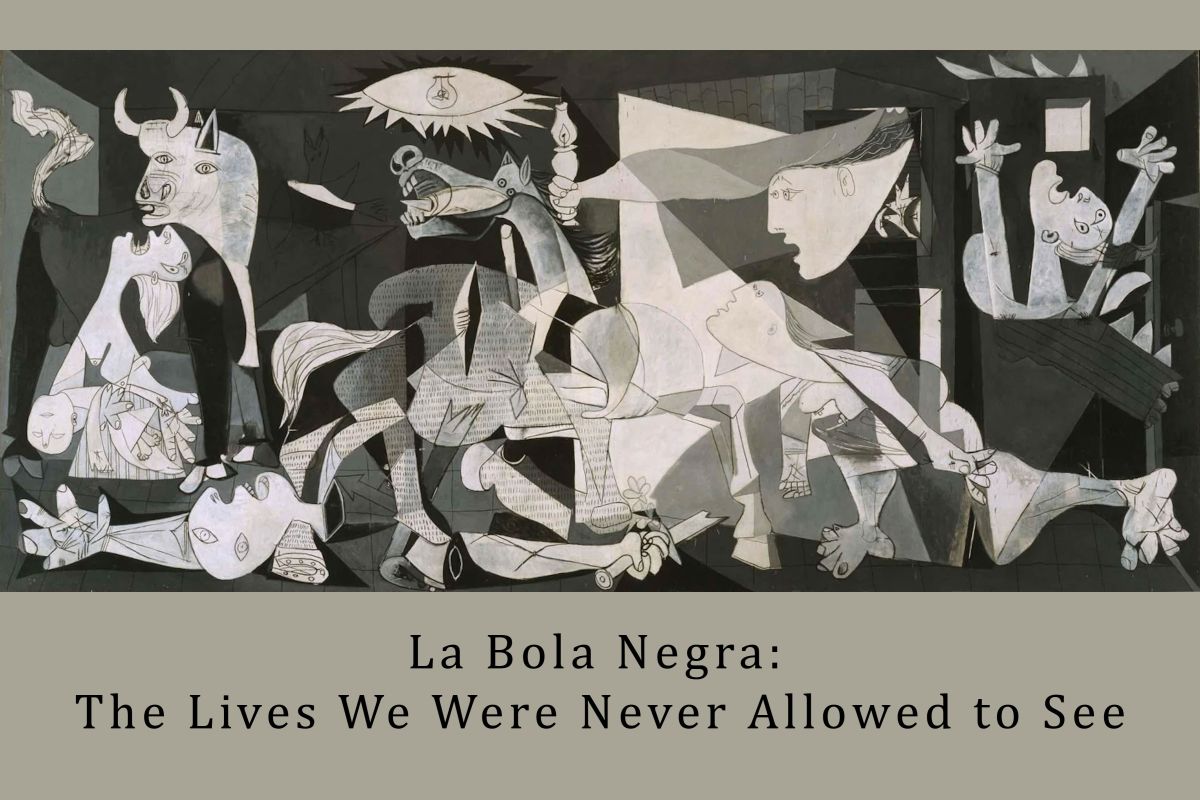
Another Spanish artist, Lorca’s contemporary Pablo Picasso, created one of the most enduring examples of art carrying history beyond its original moment. In early 1937, the government of the Spanish Republic commissioned Picasso, then living in Paris, to make a monumental painting for the Spanish Pavilion at that year’s international exposition. After German and Italian aircraft supporting the Nationalist forces bombed the Basque town of Gernika on April 26, Picasso transformed his response into Guernica, the enormous canvas depicting the terror, grief, and destruction of war. Lorca had already been murdered the previous year. The two artists did not create these works together, but their histories became part of the same national catastrophe.
Guernica is one of my favorite paintings by Picasso, not simply because of its composition or the force of its images, but because of the extraordinary connections it continues to create. It is a physical work made by one Spanish artist responding, from outside his country, to the suffering taking place at home. Yet it has never belonged in meaning to Picasso alone, or even exclusively to Spain. Its images have been carried into museums, books, classrooms, political demonstrations, and conversations across the world. People who have never visited Gernika, never experienced a war, and may not even admire the painting can still encounter it and respond to what it represents. Every generation brings new experiences to the work, and the painting acquires further associations without losing the historical event that brought it into being.
This is why Guernica is more than a painting of an event, just as Lorca’s surviving pages are more than pieces of paper. Both are tangible evidence that human imagination can make an experience available to someone who was not there. They are points of contact between lives separated by distance, language, culture, and time. What one person creates can be taken up, questioned, loved, disputed, protected, or reinterpreted by others. The connection does not require everyone to agree about its meaning. It requires that the work exist and that people have an opportunity to encounter it.
One of the most remarkable aspects of La bola negra is its opening sequence, in which the filmmakers evoke the imagery of Pablo Picasso’s Guernica. The devastation of war, the terror of people and animals, and the stark, almost graphic composition of the images recall one of the most powerful paintings ever created about human suffering. To me, this is a visual homage not only to Picasso, but to the historical moment that inspired him and to the generations of people who have encountered his painting since 1937. The filmmakers take an existing work of art and extend its meaning through another art form, connecting two artists, two different centuries, and audiences separated by geography, culture, language, and personal experience. This is one of the extraordinary abilities of cinema: to create images that become part of our own memories and remain with us long after the film has ended. I have a particularly strong ability to remember images, especially those in films, and I know that the images and experiences of La bola negra will not easily be lost to me. I consider it one of the finest experiences cinema can offer, regardless of who we are or what experiences we bring to it. Its importance lies not simply in the story it tells, but in what it enables us to see, understand, remember, and carry forward into our own lives.
A film is also one of these lasting human records. La bola negra is not merely a story that passes across a screen and disappears. It is a work that has been written, performed, photographed, edited, recorded, and preserved so that it can be shown again, translated, studied, and experienced by people who do not share its language or history. A person watching it in Palm Springs can encounter a dramatization of lives in Spain in 1932 and 1937, then carry those images into conversations with others. The film cannot restore the people and experiences that have been lost. It can, however, give surviving history and new artistic interpretation a form that can travel beyond the place and moment in which it was made.
That is an essential distinction between a record of human experience and the vast systems now used to process information. Artificial intelligence can be a valuable tool for finding, organizing, translating, and communicating material that people have created. It can also be directed toward manipulation, control, or suppression, depending on the choices of those who use it. But I would not confuse its ability to process and generate information with the intelligence of people who live the experiences from which human stories come. A system can produce a story, but it does not draw on a life it has personally lived. No system contains all the experiences, expressions, and untold stories accumulated across the hundreds of thousands of years of human existence, including those that were never recorded or were deliberately destroyed. The continuing human ability to imagine, create, preserve, and share is what gives these tools anything meaningful to work with in the first place.
What makes La bola negra particularly meaningful today is that it does not simply look backward. It reminds us of the importance of allowing people to create and share their own histories. I see that same principle reflected in the Pride exhibitions at Jaco Moretti Arts in Palm Springs, where artists make their individual experiences, observations, and perspectives visible through paintings, photography, drawings, and other physical works of art. Jaco does not give artists their voices; “he provides a place where those voices can be seen, encountered, and shared with others”. Like the film, these works extend individual experiences beyond the people who created them, allowing viewers from different backgrounds, cultures, and generations to establish their own connections with what they see. The artwork becomes more than an image or an object. It becomes a lasting, tangible connection between human lives, capable of communicating something that might otherwise remain unknown, misunderstood, or forgotten.
The same idea informs a forty-year, art-based visual autobiographical portfolio I am creating, “Out of My Darkness – Into Our Light”.It documents the life and experiences of one man: an artist, a gay man, and many other things that cannot be adequately described by a single label. Being gay is part of my life, but it does not define the whole of it any more than a profession, friendship, accomplishment, disappointment, or place where I have lived can do so. The purpose is not simply to illustrate forty years of experience. It is to give those experiences a visual form through artworks, images, objects, and their relationships with the individuals, i encountered specifically or in passing. It is created so that other people may encounter something beyond a written description or a narrow definition of who a person is. And that experience is ongoing.
Neither a gallery exhibition nor a personal portfolio is the subject of La bola negra. They matter here because they demonstrate, on a different scale, what the film is asking us to recognize. The lives of people are interconnected, and each of us encounters only part of another person’s experience. When a work is made visible, it may reach someone who lives in another community, speaks another language, or sees the world through very different memories. It can invite recognition without demanding agreement. It can help us understand why a life should not be reduced to the one characteristic that another person finds most important or least acceptable.
I cannot say enough about the extraordinary ensemble cast of La bola negra. The performances are exceptional, individually and collectively, bringing an authenticity and emotional depth to the characters that makes their experiences feel profoundly human. I believe this film has the potential to win Academy Awards not only for Best International Feature Film, but also for Best Picture, with additional recognition across several other categories. Including best actor and best supporting actor, photography, and original story. Everything I have seen and heard about the film’s critical reception and growing recognition seems entirely justified, and I would argue that its significance extends well beyond any awards it may receive. Regardless of what happens during the coming awards season, this is a film that should not be missed. It is one of the finest cinematic experiences I have encountered, and one I would recommend to anyone, regardless of their background or personal experience. For those unable to see it in a theater, La bola negra is scheduled to become available on Netflix in the United States and Canada on December 2, 2026. It deserves to be seen, discussed, remembered, and shared.
The black ball, Lorca’s surviving manuscript, Picasso’s Guernica, and the film itself are very different kinds of human-made things. One was used to exclude; others have become ways of remembering, questioning, and reconnecting. Together they illuminate the choice that runs through La bola negra: whether we allow people to create and share the stories of their lives, or permit those stories to be silenced before they can take form. We cannot recover every love that was concealed, every artwork that was destroyed, or every experience that never became a document or an image. But we can protect what survives, make room for what has not yet been told, and recognize the immense human intelligence expressed in the things we create and pass to one another. That, to me, is the lasting importance of this film: it does not merely recount people who were denied the freedom to be themselves. It gives their interconnected humanity another opportunity to be seen.
Film and Principal Cast
La bola negra (The Black Ball, 2026)
Directors: Javier Calvo and Javier Ambrossi
Screenplay: Javier Calvo, Javier Ambrossi, and Alberto Conejero
Literary foundations: Federico García Lorca’s unfinished La bola negra and Alberto Conejero’s La piedra oscura
Principal actors and characters
• Guitarricadelafuente — Sebastián
• Miguel Bernardeau — Rafael Rodríguez Rapún
• Milo Quifes — Carlos
• Carlos González — Alberto
• Lola Dueñas — Teresa
• Julio Torres — Juan Pablo
• Penélope Cruz — Nené Romero
• Glenn Close — Isabelle Durand
• Alberto Cortés — Federico García Lorca
LA BOLA NEGRA • MARTY TREINEN |
La bola negra (The Black Ball) is currently showing in the Coachella Valley at Festival Theaters in Palm Springs and Mary Pickford is D’Place in Cathedral City. The film is presented in Spanish with English subtitles. It is also scheduled to become available on Netflix in the United States and Canada on December 2, 2026.
Screening information verified for November 16, 2026. Showtimes and theatrical runs are subject to change.
About the Author
Marty Treinen is the co-founder of Universal Creative Intelligence LLC and the co-creator of Universal Creative Intelligence™ (UCI), a groundbreaking framework that teaches people of all ages the creative, emotional, and cognitive skills needed for lifelong success. An artrepreneur, arts/museum educator, and project leader, Marty draws on a decades-long career spanning fine arts, theater, film, design, and museum education.
They are currently developing the Introduction To Universal Human Intelligence Education ™ programs for individuals, students, educators, colleges and universities.
Their mission is simple: equip people with the creative intelligence to build the future they envision for themselves. Universal Leadership Education™ will give them self leadership abilities. As a columnist for The Palm Springs Tribune, Marty covers theater, film, visual and performing arts, human-centric AI, arts education and cultural events throughout the Coachella Valley. His reviews are known for their honesty, authenticity, clarity, and deep respect for the power of the arts, to enhance our lives.
© Marty Treinen 2026 All Rights Reserved
[servicetoothers.uci@gmail.com](mailto:servicetoothers.uci@gmail.com)